



Brick Wall Repair Signs: Identify Damage Early | M Z Masonry
Small brick problems can grow fast when water, soil pressure, or age weakens a wall. Therefore, learning the right brick wall repair signs helps you act early. At M Z Masonry, we guide homeowners with clear steps, careful repair options, and honest masonry advice for safer, stronger brickwork.
What Brick Wall Repair Signs Should Homeowners Notice Early?
Brick wall repair signs include cracked brick, loose mortar joints, stains, bulging areas, and visible wall movement. However, one small sign does not always mean major damage. Instead, it means your wall needs attention before water enters and creates deeper problems.
Spot Early Damage Before Small Wall Problems Grow
At M Z Masonry, we look for small changes that many homeowners miss. For example, a thin crack can widen after heavy rain. Also, a soft joint can let water reach the wall core.
Common brick wall repair signs include:
Fine cracks across one or more bricks
Mortar joints that crumble when touched
White powder stains on the wall surface
Dark moisture marks near brick edges
Bulging areas that do not look flat
These signs can point to water damage, settling, or age. Therefore, early repair can protect both the look and strength of your home.
Inspect Brickwork Regularly To Reduce Hidden Moisture Risks
Regular checks help you find brick wall repair signs before they spread. Moreover, inspections are simple when you know what to watch.
At M Z Masonry, we suggest checking exterior walls after strong rain. Then, check again before colder weather. This habit helps you compare changes over time.
During each check, look for:
New cracks near windows, doors, and corners
Soft mortar joints between bricks
Loose brick pieces near the ground
Stains on inside walls near brick areas
Gaps where brick meets trim or concrete
Also, take photos from the same angle. As a result, you can see if damage is growing.
Identify Cracks That Reveal Bigger Masonry Concerns Early
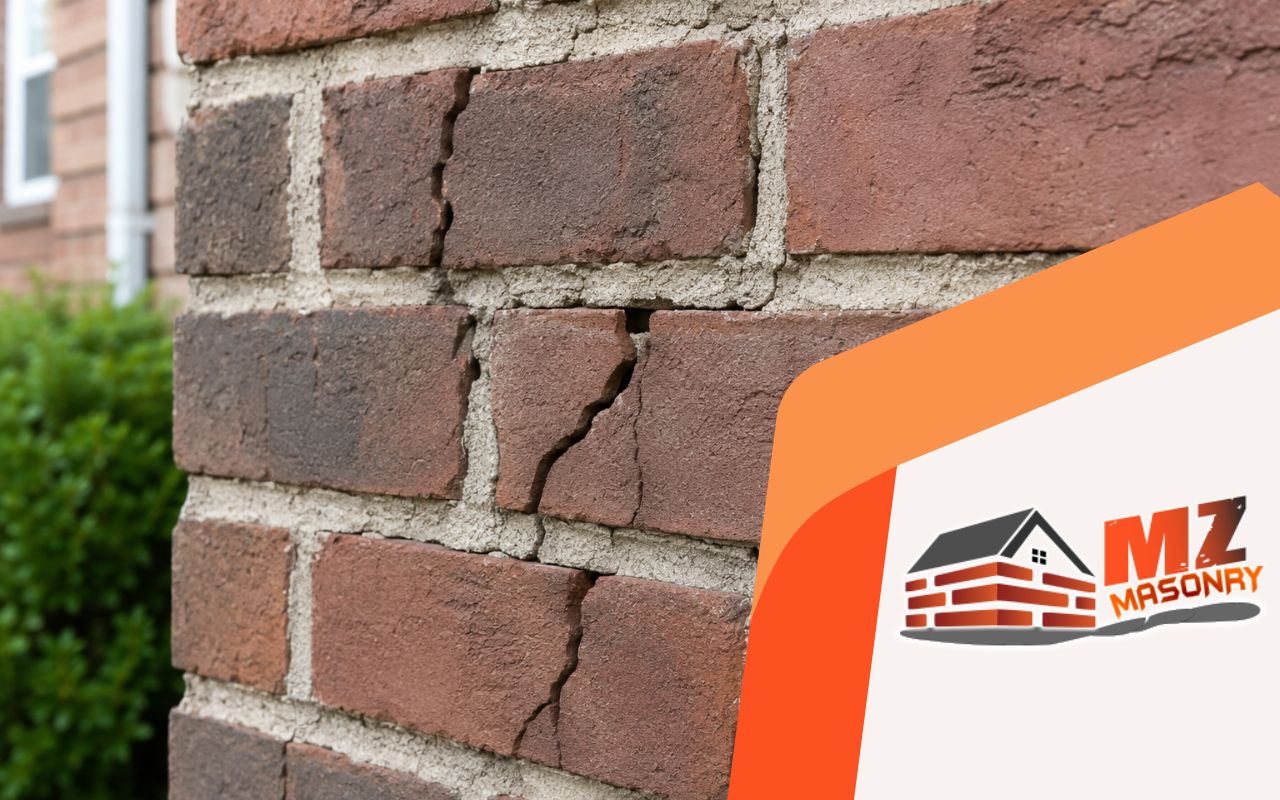
A cracked brick may look small at first. However, it can let water enter the wall. Then, moisture can make the crack wider over time.
Different cracks can mean different issues. For example, vertical cracks may come from settling. Meanwhile, diagonal cracks may show stress near an opening. Also, long cracks along mortar joints can signal shifting pressure.
At M Z Masonry, we inspect the crack pattern before we suggest repairs. Therefore, the repair can match the real cause.
Some cracked brick issues need sealing. However, deeper damage may need brick replacement. For safe next steps, you can review our masonry services and compare repair options.
Check Mortar Joints To Keep Walls Stronger Longer
Mortar joints hold brickwork together. However, they can weaken from rain, heat, age, and soil movement. Once they crumble, water can enter faster.
At M Z Masonry, we check joints for gaps, softness, and missing sections. Then, we decide if repointing is needed. Repointing removes weak mortar and adds fresh mortar that bonds the wall again.
Watch for these mortar joint problems:
Powdery material falling from the joints
Small gaps between brick and mortar
Uneven joint depth across the wall
Loose areas that sound hollow when tapped
Plants or insects entering open joints
Because mortar protects the wall, small repairs can prevent larger brick repair cost later.
Notice Wall Movement Before Repairs Become More Complex
Wall movement can be one of the most serious brick wall repair signs. It may appear as leaning, bulging, or uneven brick lines.
However, movement often starts slowly. Therefore, homeowners may not notice it right away. A level can help reveal gaps or bowed sections.
Wall movement may come from soil changes, drainage issues, or nearby construction. Also, trapped moisture can push bricks outward. When this happens, the wall may need support before normal repairs begin.
With M Z Masonry, you get a clear inspection before repair work starts. As a result, the wall receives the right solution, not a quick cover-up.
Understand Weather Damage That Weakens Brick Walls Gradually
Texas weather can be hard on brick walls. Heavy rain can soak small cracks. Then, heat can dry the surface and make mortar brittle.
Over time, this wet-and-dry cycle can weaken the wall. Also, poor drainage can keep water against the brick for too long. This can lead to flaking, stains, and soft mortar joints.
At M Z Masonry, we check drainage, wall condition, and repair needs together. Therefore, the finished repair has a better chance of lasting.
For local help, our team can guide you through masonry work in Sugar Land with clear next steps.
Follow Simple Steps To Protect Your Brickwork Longer
Good care can reduce future damage. Also, it can help you avoid surprise repair needs.
How to check your brick wall safely
First, walk around the wall during daylight.
Next, look for cracks, stains, and loose pieces.
Then, check if mortar joints feel soft or sandy.
After that, look for bulging or leaning sections.
Finally, contact a mason if signs look active.
Do not use strong pressure washing on weak brickwork. Instead, clean gently with mild soap and low water pressure. Also, keep gutters clear so water moves away from the wall.
If you want to compare recent project styles, visit our completed masonry projects.
Choose Professional Repairs That Restore Lasting Wall Strength
Some repairs are simple. However, deeper damage needs skilled hands. A mason can match brick color, rebuild weak sections, and repoint damaged mortar.
At M Z Masonry, we explain the repair plan before work begins. Therefore, you know what needs attention now and what can wait.
Professional repair may include crack filling, repointing, brick replacement, sealing, or wall support. Also, a masonry inspection in Sugar Land can help confirm if movement is active.
When you are ready, use our contact our masonry team page to request help. With M Z Masonry, you get clear guidance before the work begins.
Plan Repair Budgets With Clear Damage Details First
Brick repair cost depends on the wall size, access, and damage level. Also, material matching can affect the final plan.
Small cracks usually cost less to address than wide movement. Meanwhile, large repointing work may take more time and care. Therefore, an inspection helps avoid guesswork.
At M Z Masonry, we review the wall before we suggest repair options. Then, you can choose a clear path based on safety, appearance, and long-term value.
Frequently Asked Questions
What are the first signs a brick wall needs repair?
The first signs often include small cracks, loose mortar joints, white stains, and soft areas. Also, bulging or leaning can mean wall movement. For repair choices, visit our service options.
When should I worry about a cracked brick?
You should worry when the crack grows, spreads across several bricks, or appears near doors and windows. Also, moisture stains can mean water is entering. To share photos, use our estimate request page.
Can damaged mortar joints cause bigger wall problems?
Yes. Weak mortar joints can let water enter and loosen nearby bricks. Therefore, early repointing can protect the wall. You can explore related work on our masonry service list.
How can I tell if wall movement is serious?
Wall movement may be serious when bricks bulge, lean, or separate from nearby surfaces. Also, diagonal cracks can show stress. For local support, review our Sugar Land masonry page.
Do you provide masonry inspection in Sugar Land?
Yes. With M Z Masonry, you can request guidance for inspection and repair needs near Sugar Land. Start by contacting us through our project contact form.
References: