



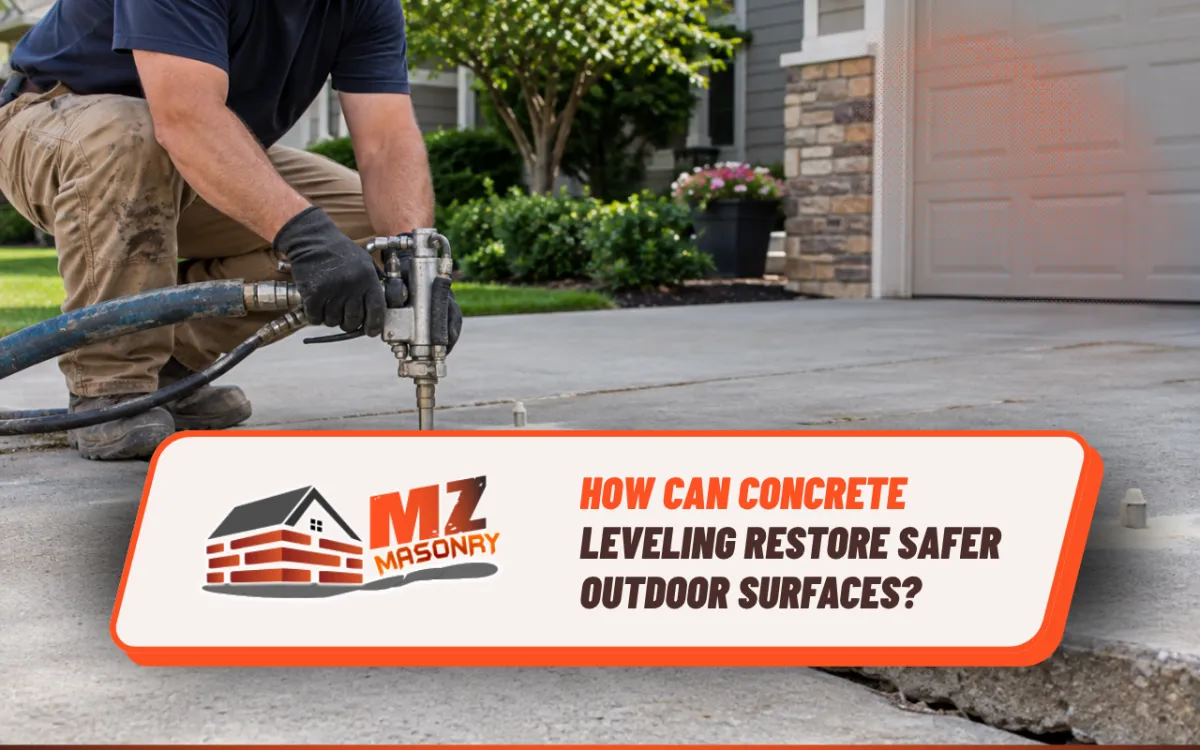
How Can Concrete Leveling Restore Safer Outdoor Surfaces?
Inspect Surface Damage Before Choosing the Right Repair
Prepare Work Areas to Support Cleaner Lasting Results
Select Practical Methods for Different Settlement Problems Today
Follow Simple Steps to Raise Low Concrete Safely
Check Alignment Carefully to Prevent Water Pooling Later
Allow Repairs Enough Time to Cure Properly Outdoors
Maintain Repaired Areas to Reduce Future Surface Problems
What causes concrete surfaces to become uneven over time?
Can sunken concrete always be raised instead of replaced?
Should cracks be repaired before leveling a slab?
Concrete leveling raises or corrects low sections so the surface becomes smoother and safer. However, the best method depends on the amount of settling and the slab condition. Small dips may need a surface treatment. Meanwhile, deeper settlement can require professional lifting methods. Therefore, checking the surface carefully should always come first.
Uneven concrete can develop when soil shifts, water washes material away, or the base settles. As a result, one part of the slab may drop below another. This can create trip points and areas where rainwater collects. Our team at M Z Masonry looks at these visible signs before recommending the next step.
Inspect Surface Damage Before Choosing the Right Repair
First, walk around the affected surface from several directions. Look for slopes, raised edges, cracks, and low areas. Additionally, watch where water stays after rain. These signs can help show where settlement has occurred.
Next, place a long straight edge across the surface. A level can also reveal small changes that are difficult to see. Meanwhile, mark problem areas with chalk so you can compare them easily.
Important warning signs include:
Sections that move or rock under pressure.
Edges that create clear tripping points.
Cracks that continue widening over time.
Water that repeatedly collects in one location.
Sunken concrete beside a driveway, patio, or walkway.
However, not every damaged slab needs the same concrete repair. A small surface dip differs from major settlement underneath the slab. Therefore, understanding the condition first can prevent unnecessary work.
When customers contact M Z Masonry, we can review their project details and explain possible next steps. You can also explore our Houston surface services to learn about related outdoor work.
Prepare Work Areas to Support Cleaner Lasting Results
Proper preparation makes every repair easier. First, remove dirt, loose material, leaves, and old debris. Then, clean cracks and edges carefully. A dirty surface can stop new repair material from bonding well.
Additionally, keep nearby areas protected before work starts. Move furniture, garden items, and other objects away from the slab. Therefore, workers can inspect and repair the surface without unnecessary obstacles.
Basic preparation may include:
Sweeping away loose dirt and debris.
Cleaning damaged joints and open cracks.
Checking nearby soil for erosion.
Finding areas where water collects.
Keeping children and pets away from the work zone.
Moisture conditions also matter. For example, water beneath a slab can contribute to movement or loss of support. Therefore, fixing only the visible surface may not solve the original cause.
At M Z Masonry, our approach begins with understanding the area around the damaged section. This helps us consider drainage, settling, and surface condition together.
Select Practical Methods for Different Settlement Problems Today
Different problems need different solutions. For example, shallow surface variations may sometimes accept a suitable leveling compound. However, larger drops can require lifting the existing slab from underneath.
Slab leveling methods can include specialized materials placed beneath settled sections. These materials fill empty space and help raise the slab. However, this work needs careful control because lifting too quickly may damage the concrete.
Additionally, heavily broken surfaces may no longer be good candidates for lifting. In those cases, partial or full replacement can sometimes make more sense. Therefore, the slab condition matters as much as the amount of settlement.
If cracking is the main concern, our driveway crack repair guide explains why early attention can help limit larger problems.
Follow Simple Steps to Raise Low Concrete Safely
Concrete leveling should follow a clear order. Although methods vary, careful inspection and controlled work remain important throughout the process.
Identify the low area. First, mark every section that has settled.
Check the slab condition. Next, look for major cracks or broken edges.
Review surrounding drainage. Then, find possible water or soil problems.
Choose the repair method. Afterward, match the method to the amount of settlement.
Raise or fill gradually. Most importantly, avoid sudden movement that could stress the slab.
Check the final surface. Finally, confirm that the area feels stable and drains correctly.
Small indoor surface corrections can sometimes be manageable for experienced homeowners. However, lifting a heavy outdoor slab can require specialized equipment and knowledge. Therefore, professional help is often the safer choice for deeper settlement.
With M Z Masonry, you can discuss the condition before deciding between repair and replacement. If the existing driveway has extensive damage, our Houston driveway replacement guide explains another possible option.
Check Alignment Carefully to Prevent Water Pooling Later
Once the repair is complete, check the surface again. First, place a straight edge across the repaired section. Then, look for remaining dips or abrupt height changes.
Additionally, review the slope instead of focusing only on appearance. Outdoor concrete often needs a controlled slope so rainwater can move away. Therefore, making every section perfectly horizontal may not support good drainage.
Walk across the repaired area carefully after the approved curing period. The transition between sections should feel smooth. Meanwhile, water should not remain trapped in newly corrected low areas.
Concrete leveling should improve practical use as well as appearance. Consequently, final alignment is an important part of a successful repair.
Allow Repairs Enough Time to Cure Properly Outdoors
Repair materials need enough time to develop strength. However, curing periods differ depending on the material and repair method. Therefore, always follow the instructions for the specific product or system used.
Avoid walking, driving, or placing heavy items on the surface too early. Otherwise, the repaired section may shift or develop new marks. Additionally, protect the area from unnecessary activity while curing continues.
Weather can also affect the process. High heat, rain, and changing moisture levels may influence how some materials cure. Consequently, planning the work around suitable conditions can support better results.
Our team at M Z Masonry focuses on clear preparation and proper curing when working with concrete surfaces. These steps can help reduce avoidable problems after the project ends.
Maintain Repaired Areas to Reduce Future Surface Problems
Regular care can help repaired areas stay in better condition. First, keep joints and drainage areas clear. Then, inspect the slab after heavy rain or major weather changes.
Small cracks deserve attention because water can enter them. Over time, moisture and soil movement may make the problem larger. Therefore, early concrete repair can sometimes prevent more extensive work later.
Also, avoid allowing water to collect repeatedly beside the slab. Good drainage can reduce soil movement and erosion around the edges. Meanwhile, keeping the surface clean makes new damage easier to notice.
Concrete leveling can correct settlement, but long-term care still matters. At M Z Masonry, we encourage property owners to watch for changes rather than waiting for serious movement.
If your driveway, walkway, or patio keeps settling, you can request a surface assessment so we can review the area and discuss suitable options.
Frequently Asked Questions
What causes concrete surfaces to become uneven over time?
Soil movement, erosion, drainage problems, and base settlement can all contribute to uneven concrete. Additionally, repeated water movement may remove support beneath sections. You can review our Houston concrete project options for related surface services.
Can sunken concrete always be raised instead of replaced?
No. The answer depends on the slab condition and amount of damage. Therefore, badly broken sections may need another solution. Our driveway replacement planning guide explains when replacement may deserve consideration.
Should cracks be repaired before leveling a slab?
The repair order depends on what caused the cracking and settlement. Therefore, the slab should be inspected before work begins. Our guide to repairing driveway cracks explains why cracks should not be ignored.
How can homeowners identify serious concrete settlement?
Look for growing height differences, widening cracks, pooling water, or unstable sections. Additionally, note any new trip points. For professional guidance, schedule a project review and share your concerns with our team.
When should professional slab leveling be considered?
Professional help is sensible when settlement is deep, widespread, or difficult to diagnose. It is also useful when specialized lifting equipment is needed. Explore our Houston outdoor surface services for more information.
References: