



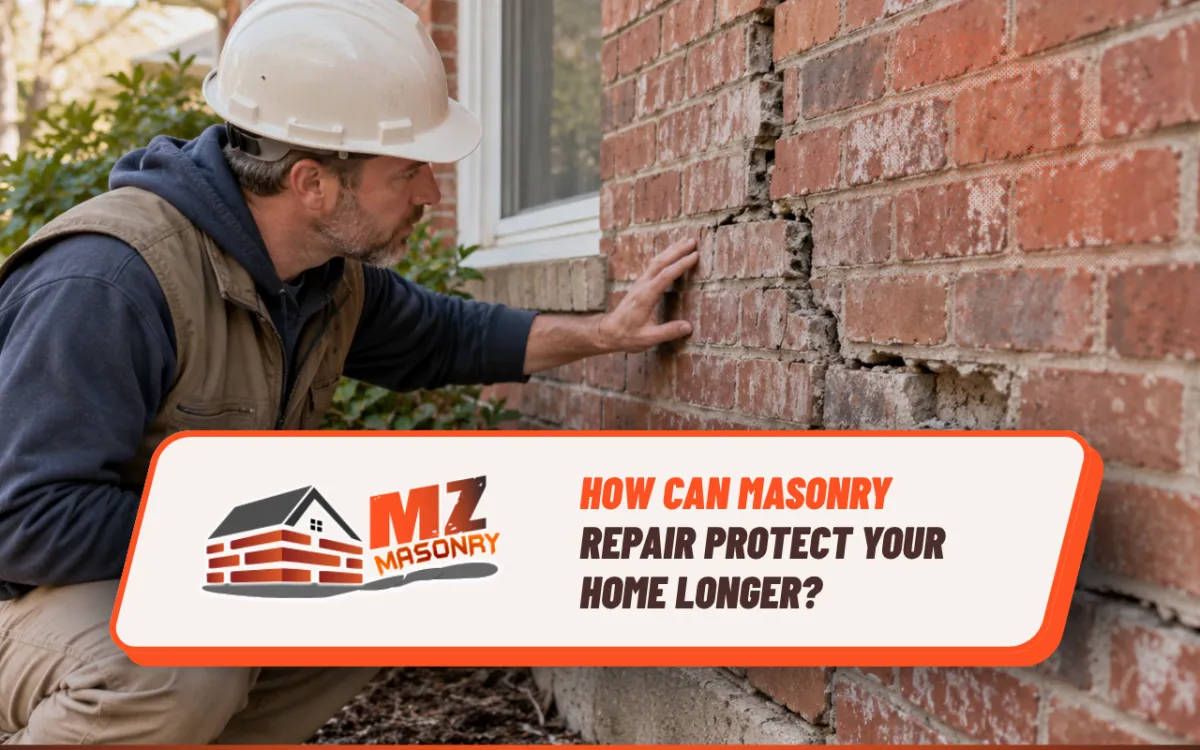
How Can Masonry Repair Protect Your Home Longer?
Identify Early Damage Before Small Problems Become Serious
Gather Proper Materials to Make Repairs More Reliable
Prepare Work Areas Carefully for Safer Repair Results
Restore Crumbling Bricks Through Careful Replacement Steps
Follow These Steps for Basic Brick Replacement
Renew Weak Mortar Joints to Limit Water Entry
Revive Damaged Stone While Preserving Its Natural Appearance
Prevent Future Wear Through Simple Routine Masonry Care
Recognize Major Warning Signs That Require Professional Attention
What are the first signs masonry needs repair?
Can damaged mortar cause problems for brick walls?
When should a damaged brick be replaced completely?
Masonry repair protects your home by fixing damaged bricks, mortar, and stone before moisture causes wider problems. Moreover, timely repairs can strengthen weak areas and improve curb appeal. At M Z Masonry, we inspect visible damage first. Then, we recommend the right repair based on the condition of the surface.
Identify Early Damage Before Small Problems Become Serious
First, inspect brick, mortar, and stone surfaces for visible signs of wear. Small cracks may seem harmless. However, they can allow moisture into joints and surrounding materials.
Also, look for loose bricks, chipped stone, crumbling joints, and unusual discoloration. These signs often point to masonry damage that deserves closer attention.
At M Z Masonry, we believe early checks make planning easier. Therefore, homeowners can understand which areas need attention before starting masonry repair.
Check brick faces for cracks, chips, or loose sections.
Inspect mortar joints for gaps, erosion, or crumbling material.
Look for staining near areas exposed to frequent water.
Notice walls that appear uneven, bowed, or separated.
Take photos so changes can be compared over time.
Additionally, interior damp spots near exterior masonry can suggest moisture is entering somewhere. Because the source may not be obvious, repeated moisture deserves professional attention.
For a broader look at available brick, stone, and concrete work, explore our masonry service options.
Gather Proper Materials to Make Repairs More Reliable
Next, choose tools and materials that fit the damaged surface. A simple mortar repair needs different supplies than replacing a broken brick.
For example, basic hand tools may include a pointing trowel, masonry chisel, hammer, brush, and mixing bucket. Safety glasses and gloves are also important.
However, material selection matters just as much. New mortar should work well with the existing masonry. Likewise, replacement bricks should closely match surrounding pieces.
Use clean tools that allow accurate joint work.
Choose replacement materials with a similar appearance.
Keep brushes ready for loose dust and debris.
Wear eye, hand, and breathing protection when needed.
Prepare water and mixing supplies before work begins.
Because incorrect materials can create new problems, larger projects deserve careful planning. At M Z Masonry, you can discuss the condition before deciding how to proceed.
Prepare Work Areas Carefully for Safer Repair Results
Before starting, create a clean and stable work area. Remove objects that block access to damaged masonry. Also, keep children and pets away from tools and debris.
If the repair is above ground level, safe access becomes especially important. Unstable ladders or platforms can turn a simple project into a serious risk.
Furthermore, cover nearby surfaces when loose mortar or brick pieces may fall. A tarp can simplify cleanup and protect surrounding areas.
At M Z Masonry, we value orderly work areas because preparation supports cleaner results. Therefore, safety should remain part of every masonry repair plan.
Restore Crumbling Bricks Through Careful Replacement Steps
Brick repair often begins by deciding whether a damaged brick can remain. Minor surface wear may not require replacement. However, badly crumbling or loose bricks can need removal.
Follow These Steps for Basic Brick Replacement
Remove loose material around the damaged brick carefully.
Clean dust and old mortar from the opening.
Dampen the surrounding masonry without soaking it.
Prepare suitable mortar using the product instructions.
Place the replacement brick evenly within the opening.
Fill surrounding joints and remove extra mortar carefully.
Allow the repaired area enough time to cure properly.
Moreover, avoid damaging nearby bricks while removing the old material. A rushed repair can expand the affected area unnecessarily.
Material matching also affects the finished appearance. Therefore, homeowners planning brick repair should compare color, size, and joint style before replacement.
For more guidance about restoring these materials, read our brick and stone restoration guide.
Renew Weak Mortar Joints to Limit Water Entry
Deteriorated joints are another common reason homeowners consider masonry repair. Mortar can weaken through weather exposure, moisture, age, and movement.
When mortar starts crumbling, the damaged material should be assessed before new mortar is added. Simply covering weak joints may hide the problem temporarily.
Instead, loose material should be removed carefully until a firm surface remains. Then, the joint must be cleaned so fresh material can bond properly.
Additionally, lightly damp masonry can prevent dry brick from taking moisture from fresh mortar too quickly. Proper preparation supports a stronger mortar repair.
The joint finish should also match nearby areas whenever possible. Consequently, the repaired section can blend more naturally with the existing wall.
Our team at M Z Masonry can assess larger areas of failing mortar. When damage extends across a wall, professional evaluation can help avoid incomplete repairs.
Revive Damaged Stone While Preserving Its Natural Appearance
Stone repair requires a slightly different approach because stone varies in color, texture, size, and hardness. Therefore, each damaged area should be reviewed individually.
Small chips may sometimes allow a limited repair. However, deep cracks or unstable stones can require removal and replacement.
When replacement is needed, matching the original appearance becomes important. Similar size, texture, and tone can create a more consistent result.
At M Z Masonry, we work with stone features as part of our masonry services. Therefore, we consider both stability and appearance when planning repairs.
Inspect cracks before deciding whether patching is suitable.
Remove loose pieces that could create additional damage.
Match replacement stone as closely as practical.
Fill surrounding joints carefully with suitable mortar.
Keep repaired areas protected while materials cure.
Homeowners near Sugar Land can also review our Sugar Land project information when planning local masonry work.
Prevent Future Wear Through Simple Routine Masonry Care
Regular care can help masonry stay attractive and functional longer. Therefore, inspect exterior surfaces from time to time, especially after severe weather.
Keep gutters and downspouts working correctly because repeated water flow can affect nearby masonry. Also, trim plants that hold moisture directly against walls.
Small cracks and loose joints deserve attention before they spread. Although not every mark means serious damage, changes should be monitored.
Cleaning should also remain gentle. Strong methods can sometimes damage mortar or alter masonry surfaces. Therefore, choose cleaning methods that suit the material.
For homeowners around Fresno, our Fresno masonry project details provide another way to explore local service information.
Recognize Major Warning Signs That Require Professional Attention
Some masonry damage goes beyond a simple home repair. Large cracks, bulging walls, widespread loose masonry, and repeated moisture can indicate deeper concerns.
Likewise, stair-shaped cracks can deserve professional review. Therefore, avoid treating significant movement as only a surface problem.
Professional support also makes sense when repairs involve heights, large areas, or difficult material matching. Experience can reduce unnecessary damage during removal and rebuilding.
At M Z Masonry, we explain the condition and discuss practical next steps. Moreover, our goal is to help you understand the work before repairs begin.
If your masonry damage keeps returning, you can request a project assessment from our team.
Frequently Asked Questions
What are the first signs masonry needs repair?
Cracks, loose bricks, crumbling joints, chipped stone, and moisture stains are common warning signs. Therefore, early inspection can help identify the cause. You can review our available masonry solutions to see which type of work may fit your property.
Can damaged mortar cause problems for brick walls?
Yes. Weak mortar can leave gaps where moisture may enter. Over time, surrounding bricks can also loosen or deteriorate. For more repair guidance, read our brick and stone repair information.
When should a damaged brick be replaced completely?
A brick may need replacement when it is badly cracked, loose, or crumbling beyond a small surface area. Homeowners nearby can explore our Sugar Land masonry project options for additional service information.
Should homeowners repair large masonry cracks themselves?
Large or spreading cracks deserve professional inspection because the visible damage may have a deeper cause. Therefore, you can schedule a masonry evaluation before deciding how to proceed.
How can homeowners reduce future masonry damage?
Regular inspections, good drainage, gentle cleaning, and early repairs can reduce avoidable wear. Additionally, correcting moisture problems can protect nearby joints. You can also review our masonry project questions and answers for more guidance.
References:
Better Homes & Gardens — What Is Tuckpointing? A Guide to Updating Brick