



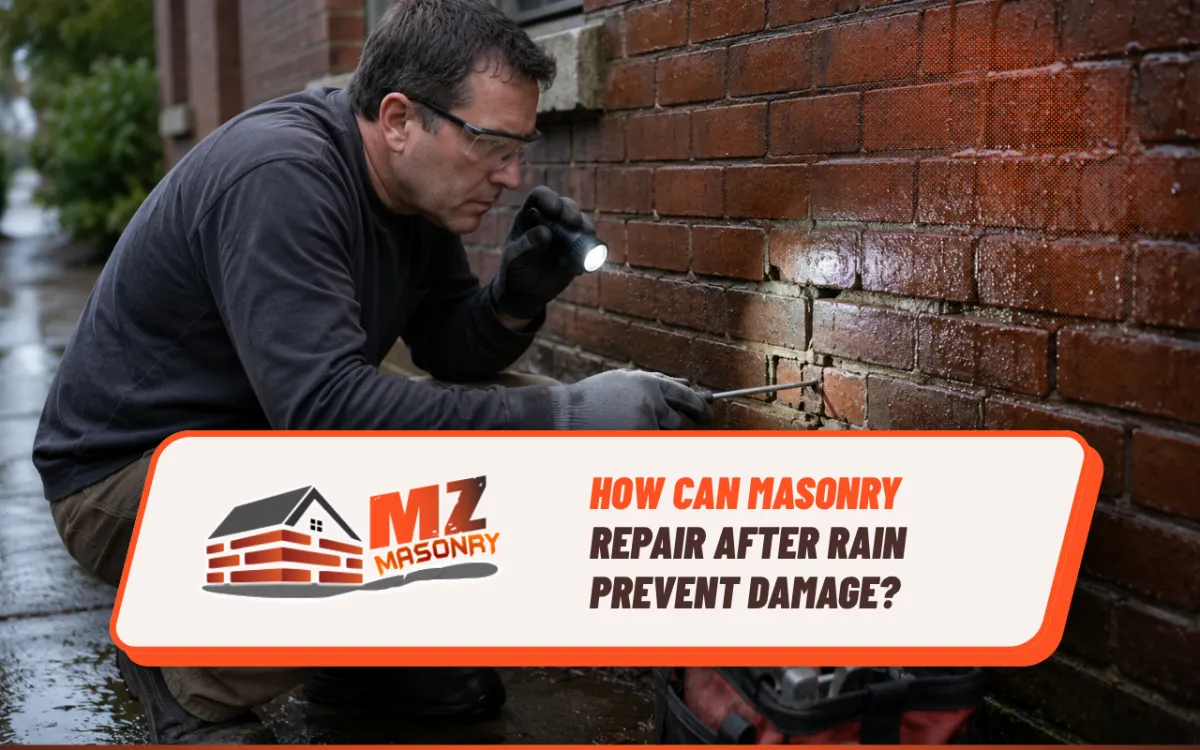
How Can Masonry Repair After Rain Prevent Damage?
How Can Masonry Repair After Rain Prevent Damage?
Inspect Every Surface Before Planning Lasting Masonry Repairs
Recognize Moisture Patterns That Reveal Hidden Wall Problems
Gather Proper Tools While Protecting People And Property
Choose Compatible Mortar To Support Durable Joint Performance
Follow Careful Steps To Restore Rain-Damaged Masonry Joints
Correct Drainage Sources To Reduce Future Water Intrusion
Replace Failed Bricks And Stones With Matching Materials
Maintain Repaired Masonry Through Simple Seasonal Care Routines
How soon should masonry be checked after heavy rain?
Can cracked mortar joints allow water inside walls?
Should damaged brick be patched or fully replaced?
Masonry repair after rain restores damaged joints, bricks, and stones after moisture enters weak areas. First, the surface must dry enough for a clear inspection. Then, loose material should be removed and replaced with a compatible mortar. Moreover, drainage problems must be corrected because surface repairs alone may not stop future water intrusion.
At M Z Masonry, we inspect the visible damage and the areas around it. Rain may reveal problems that existed before the storm. For example, an open joint can direct water behind bricks. Likewise, a damaged downspout may keep one wall wet for several days.
Inspect Every Surface Before Planning Lasting Masonry Repairs
Begin the inspection after the rain stops and the area becomes safe. However, do not rush onto wet ladders or slippery walkways. Look at the wall from several angles because shadows can hide small gaps.
Common warning signs include:
Loose, sandy, or missing mortar between masonry units
Dark patches that remain after nearby areas dry
White deposits on brick, stone, or mortar surfaces
Cracked joints around doors, windows, and wall corners
Bricks that flake, crumble, lean, or move slightly
Stones that shift when touched with light pressure
Next, check gutters, flashing, window edges, and downspouts. These areas often guide rain toward weak joints. Also, note any indoor stains near the affected wall. They may indicate water intrusion behind the outer surface.
At M Z Masonry, we recommend taking clear photos of every concern. The images make changes easier to track. They also help our team understand the repair area before a site visit.
Recognize Moisture Patterns That Reveal Hidden Wall Problems
Rain does not always enter where the damage appears. Instead, water may travel behind brick or stone before becoming visible. Therefore, the highest wet point can offer an important clue.
A narrow stain below a window may suggest failed sealant or flashing. Meanwhile, moisture near the wall base may result from poor drainage or soil contact. Repeated wet areas around one downspout may show that runoff needs redirection.
Hollow sounds can also suggest a weak bond behind the surface. Nevertheless, tapping should remain gentle. A damaged brick or loose stone may break under strong pressure.
Mortar damage often appears as gaps, shallow joints, or powdery material. Additionally, cracked joints can widen as the wall moves and dries. These openings should not be covered without finding the moisture source first.
Gather Proper Tools While Protecting People And Property
Small surface repairs require suitable tools and careful preparation. However, high walls, loose sections, or wide cracks need professional review. At M Z Masonry, we place safety before speed because unstable masonry can fall without warning.
Basic preparation may include:
Work gloves, safety glasses, and a suitable dust mask
A pointing trowel and a clean mortar mixing container
A masonry brush for loose dust and small particles
Plastic covers for windows, plants, and finished surfaces
A stable work platform for safe, reachable areas
Keep people and pets away from the work zone. Furthermore, protect nearby glass and painted surfaces before removing old mortar. Never work from an unstable ladder or during wet weather.
Power tools can damage surrounding bricks when used without experience. Therefore, hand removal may be safer for small, delicate areas. Still, a trained mason should handle deep removal, large repairs, and structural concerns.
Choose Compatible Mortar To Support Durable Joint Performance
The strongest mortar is not always the right mortar. Instead, the mix should match the wall’s age, masonry type, and existing joint condition. A mix that is too hard can place extra stress on softer bricks.
Older walls may require a softer mortar that allows normal moisture movement. Conversely, newer construction may use a different cement-based blend. Color and texture should also match the existing joints as closely as possible.
Before starting brick repair or stone repair, test a small amount in a hidden area. The wet color will usually change while curing. Therefore, allow the sample to dry before judging the final match.
At M Z Masonry, we review the existing materials before selecting a repair mix. This step supports better bonding and a more natural finish. It also helps prevent rigid patches that may damage nearby units later.
Follow Careful Steps To Restore Rain-Damaged Masonry Joints
Proper masonry repair after rain requires a clean surface and controlled curing. The following process describes the general steps. However, wall movement or deep moisture can require a different solution.
Allow the area to dry. Wait until standing water disappears and the wall can be inspected safely.
Find the moisture source. Check flashing, gutters, joints, sealant, and nearby drainage before patching damage.
Remove loose material. Clear failed mortar carefully without breaking the surrounding brick or stone edges.
Clean the open joint. Brush away dust so the replacement mortar can contact a solid surface.
Dampen the repair area. Light moisture can prevent dry masonry from pulling water from fresh mortar too quickly.
Place compatible mortar. Pack the joint fully and avoid thin surface patches over loose material.
Match the joint shape. Tool the surface so it follows the surrounding joint profile.
Protect the curing repair. Shield fresh mortar from strong sun, heavy rain, and rapid drying.
Do not seal fresh mortar before it cures properly. Additionally, avoid painting over damp masonry. Both actions may trap moisture and hide continuing problems.
Correct Drainage Sources To Reduce Future Water Intrusion
A repaired joint may fail again when runoff continues to reach the same area. Therefore, drainage corrections are an important part of long-term repair.
Helpful actions include:
Cleaning blocked gutters before the next storm arrives
Directing downspouts away from walls and foundations
Repairing gaps around doors, windows, and masonry openings
Checking flashing above windows, doors, and roof connections
Keeping soil, mulch, and plants below masonry drainage points
Breathable water-repellent treatments may support some masonry surfaces. However, a coating should not replace failed mortar or damaged flashing. Also, an unsuitable sealer can trap moisture inside the wall.
When customers contact M Z Masonry, we examine both the damaged area and its surroundings. That broader review helps us address the cause instead of covering only the visible symptom.
Replace Failed Bricks And Stones With Matching Materials
Severely crumbling units may need replacement instead of a surface patch. First, the damaged brick or stone must be removed without harming nearby units. Then, the opening needs cleaning and careful measurement.
Replacement materials should match the original size, color, and texture. Nevertheless, exact matches may be difficult on older walls. In those cases, thoughtful placement can make small differences less noticeable.
Fresh mortar should support the replacement unit on every required side. After placement, the unit must align with the surrounding wall. Finally, the joints should match the nearby depth and finish.
For examples of completed brickwork, stonework, patios, and walls, explore our completed masonry project portfolio. These examples can help you compare finishes before planning your repair.
Maintain Repaired Masonry Through Simple Seasonal Care Routines
Regular inspections can stop small openings from becoming larger repairs. Therefore, review exterior masonry after strong storms and during seasonal home maintenance.
Check repaired joints for new gaps, color changes, or movement. Moreover, remove leaves and debris from nearby drains. Keep sprinklers from spraying walls, and trim plants that hold moisture against masonry.
At M Z Masonry, we encourage homeowners to report changes early. Fast attention can limit mortar damage and protect nearby materials. Our masonry construction and restoration services cover brick, block, stone, concrete, and related outdoor features.
We also work across the Houston area. To review our broader coverage, visit our Houston area masonry service locations.
Frequently Asked Questions
How soon should masonry be checked after heavy rain?
Inspect the area once the storm ends and conditions become safe. However, some moisture marks become clearer during drying. For professional guidance, review our masonry construction and restoration services.
Can cracked mortar joints allow water inside walls?
Yes. Open joints can create paths for water intrusion, especially during wind-driven rain. Our completed masonry project portfolio shows different masonry surfaces and finished work.
Should damaged brick be patched or fully replaced?
Minor surface wear may allow a limited repair. However, loose or deeply crumbling brick may need replacement. You can discuss the condition through our masonry repair consultation request.
Why does mortar damage return after previous repairs?
Recurring damage may come from poor drainage, movement, incompatible mortar, or trapped moisture. Therefore, the source must be identified first. Our masonry construction and restoration services explain the materials and project types we handle.
When does rain damage require a professional mason?
Call a professional when bricks move, stones shift, cracks cross several joints, or water keeps returning. With M Z Masonry, you receive clear guidance based on the visible condition. Start with our masonry repair consultation request.
Timely masonry repair after rain can protect your wall from further moisture and material loss. More importantly, the correct repair addresses both the damage and its source. At M Z Masonry, we combine careful inspection, compatible materials, and clean workmanship. Therefore, your repaired masonry can look natural and remain dependable through future weather.
References: