



How Does Paver Patio Cleaning Restore Outdoor Spaces?
How Does Paver Patio Cleaning Restore Outdoor Spaces?
Protect Your Patio Through Consistent Seasonal Cleaning Habits
Gather Safe Tools Before Beginning Your Washing Routine
Prepare Every Surface for Safer and Easier Cleaning
Remove Common Stains Without Damaging Patio Pavers
Restore Joint Sand to Support Stable Paver Surfaces
Control Patio Weeds With Simple Preventive Care Methods
Use Pressure Washing Carefully for Deeper Surface Cleaning
Maintain Lasting Results With an Easy Care Schedule
How often should a paver patio receive deep cleaning?
Can pressure washing remove sand between patio pavers?
What is the safest way to remove patio weeds?
A clean patio feels brighter, safer, and more welcoming. However, dirt, weeds, stains, and loose sand can quickly hide its beauty. Regular care protects the surface and keeps the space ready for meals, gatherings, and quiet afternoons. With simple steps, you can restore your pavers without turning maintenance into a difficult project.
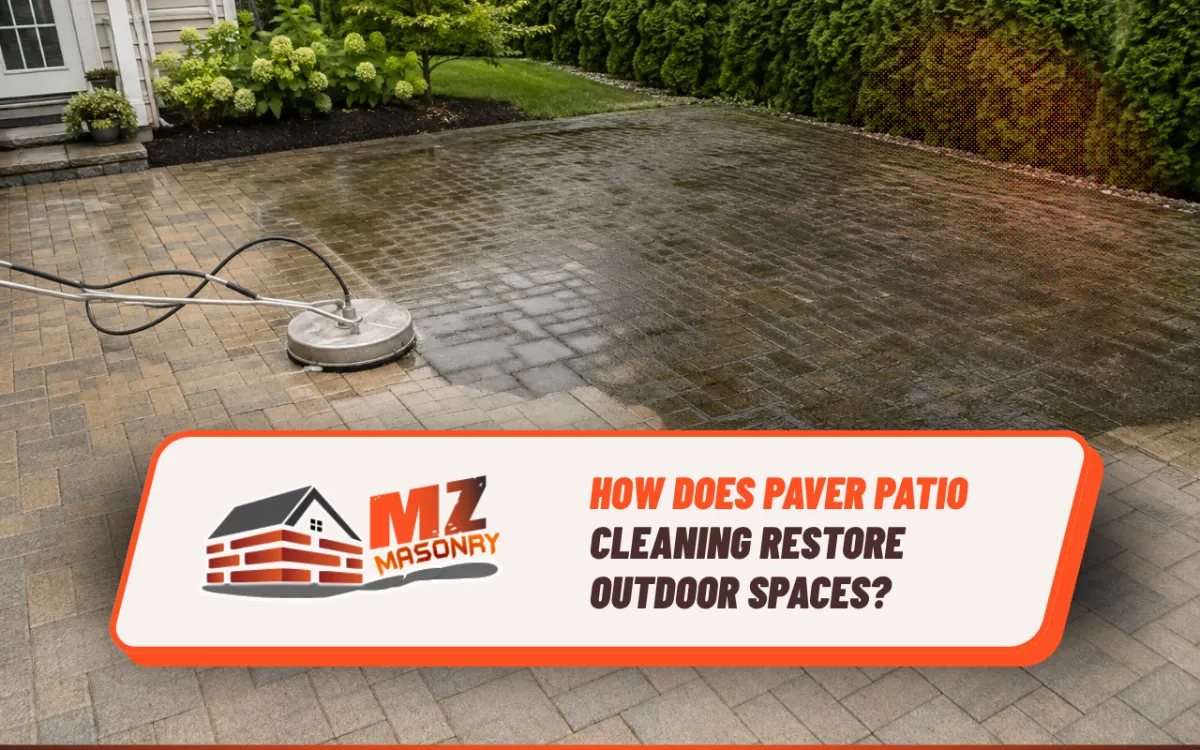
Paver patio cleaning removes surface dirt, organic growth, weeds, and common stains. It also reveals weak joints and loose pavers before they become larger problems. Therefore, regular cleaning improves appearance, supports safer walking, and protects your outdoor investment. At M Z Masonry, we believe a good cleaning plan should fit the patio’s material, condition, and daily use.
Protect Your Patio Through Consistent Seasonal Cleaning Habits
Leaves, soil, pollen, and food spills settle on patio surfaces throughout the year. Moreover, moisture can help algae and mildew grow in shaded areas. These materials may make pavers look dark, uneven, or neglected.
Regular sweeping prevents debris from breaking down inside the joints. Likewise, a gentle rinse removes light dust before it becomes harder to clean. A deeper cleaning may be useful after wet seasons, heavy gatherings, or long periods without care.
At M Z Masonry, we recommend checking the entire patio before each cleaning session. Look for loose units, missing sand, drainage concerns, and damaged edges. This quick review helps you choose the safest cleaning method.
Sweep leaves and loose dirt at least once each month.
Rinse spills before they dry or spread across nearby pavers.
Check shaded areas for algae, mildew, and moss growth.
Inspect joints after storms or periods of heavy foot traffic.
Address loose pavers before washing the surrounding surface.
Consistent patio upkeep also improves safety. Wet organic growth can create slippery areas near doors, steps, and seating spaces. Therefore, early cleaning makes the patio more comfortable for family members and guests.
Gather Safe Tools Before Beginning Your Washing Routine
The right tools make paver washing easier and reduce the risk of surface damage. First, use a strong outdoor broom for dry debris. Then, choose a nylon brush for areas that need more attention. Avoid wire brushes because they may scratch some paver finishes.
A garden hose often provides enough water for routine care. However, a pressure washer may help with deeper buildup when used carefully. Start with low pressure and a wide spray pattern. Also, keep the nozzle moving instead of aiming at one area.
Before cleaning, gather these basic items:
An outdoor broom or leaf blower for loose debris.
A stiff nylon brush for controlled scrubbing.
A garden hose with an adjustable spray nozzle.
A cleaner made for the specific paver material.
Gloves and eye protection for safer product handling.
Fresh joint sand for gaps discovered after cleaning.
Always read the cleaner label before use. Furthermore, test the product on a hidden section. This small step can reveal unwanted color changes before you treat the full patio.
When customers contact M Z Masonry, we encourage them to describe the paver type and visible problem. Clear details help our team discuss practical care options. For wider outdoor projects, explore our masonry services in Fresno.
Prepare Every Surface for Safer and Easier Cleaning
Remove furniture, grills, rugs, pots, toys, and decorations before washing. As a result, you can reach the full surface and prevent dirty water from splashing belongings. Move delicate plants away from the work area whenever possible.
Next, sweep the patio from one side to the other. Pay close attention to corners and joints where leaves collect. Then, mark oil spots, rust marks, algae patches, and other areas needing focused stain removal.
Protect nearby grass and garden beds from cleaner runoff. Additionally, confirm that water can flow away from the home. Poor drainage can carry dirt back across the patio and leave new marks.
Use these preparation steps in order:
Clear all furniture and movable objects.
Sweep the surface and empty debris from corners.
Identify stains and sections with heavy organic growth.
Cover nearby plants when the cleaner label requires protection.
Test the chosen product on a small, hidden area.
Confirm that rinse water has a safe drainage path.
With M Z Masonry, you get clear guidance before larger patio work begins. If your surface needs more than cleaning, review our paver installation in Sugar Land information.
Remove Common Stains Without Damaging Patio Pavers
Different stains need different treatments. Therefore, identify the source before applying a cleaner. A product that works on grease may not suit rust, mildew, or plant marks.
For fresh oil, absorb as much liquid as possible before washing. Then, apply a paver-safe degreaser according to its label. Allow the product to work for the stated time. Afterward, scrub gently and rinse the entire treated area.
Rust often requires a masonry-safe rust remover. Avoid strong acids unless the paver maker approves them. Harsh products can change the finish or create a lighter patch.
For mildew and algae, begin with the mildest suitable cleaner. Let it loosen the growth before brushing. Consequently, you need less force and lower the chance of scratching the surface.
Never combine cleaning products. Also, avoid guessing the correct mixture. At M Z Masonry, we place surface protection ahead of fast results. A slower and safer method often produces a more even finish.
Restore Joint Sand to Support Stable Paver Surfaces
Cleaning may expose low joints or wash away loose joint sand. These gaps matter because sand supports the pavers and limits unwanted movement. Therefore, inspect every joint after the patio dries.
Before adding new material, remove loose dirt from the gaps. Next, follow the sand maker’s directions for depth, weather, and water use. Some products need gentle misting, while others have different activation steps.
Sweep the new sand diagonally across the patio. This motion helps fill joints from several directions. Then, remove extra sand from the paver faces before adding water.
Avoid heavy water flow because it can push fresh material out. Moreover, keep people and furniture away during the stated curing period. Proper joint care can reduce shifting, discourage weed growth, and support a cleaner appearance.
At M Z Masonry, we also examine the cause of repeated sand loss. Drainage, strong water pressure, or unstable edges may contribute to the problem. Replacing sand alone may not solve an underlying patio issue.
Control Patio Weeds With Simple Preventive Care Methods
Weeds often grow where soil and seeds collect between pavers. Although roots appear in the joints, they may begin in debris above the base. Regular sweeping is therefore an important form of weed removal.
Pull small weeds when the ground is slightly damp. This condition can make root removal easier. Use a narrow hand tool when needed, but avoid chipping the paver edges.
For lasting control, combine several simple habits:
Remove weeds before they release new seeds.
Sweep grass clippings and soil away after yard work.
Refill open joints with the correct sand product.
Keep patio edges clear of spreading garden plants.
Use weed treatments only as their labels direct.
Be careful with homemade mixtures. Salt, strong vinegar, and similar products may harm nearby grass or plants. They may also affect certain patio materials. Consequently, a tested product or manual method may be safer.
Use Pressure Washing Carefully for Deeper Surface Cleaning
Pressure washing can remove deep dirt quickly. However, too much force may mark pavers or remove joint material. Begin with the lowest practical setting and a wide fan tip.
Hold the nozzle at a steady distance. Then, move across the surface with smooth, overlapping passes. Do not aim the spray directly into the joints. Also, never hold the stream in one place.
Work in small sections so the cleaning stays even. Afterward, rinse away loosened dirt and inspect the surface. Once the patio dries, replace missing sand where necessary.
Pressure washing is not always the best choice. Older, cracked, loose, or delicate pavers may need a gentler process. When the condition is uncertain, contact our team for a professional patio assessment.
Maintain Lasting Results With an Easy Care Schedule
A simple schedule keeps paver patio cleaning manageable. Sweep monthly, rinse spills quickly, and inspect joints every few months. Additionally, clean after major storms or outdoor events when debris collects.
Move grills carefully and use a protective mat beneath cooking areas. Furthermore, place furniture feet gently to reduce scratches. Keep planters raised when trapped moisture causes dark rings.
Seasonal inspections also reveal drainage problems, loose borders, and uneven areas. Early action usually requires less work than a delayed repair. Our team at M Z Masonry can explain suitable next steps when routine patio upkeep no longer solves the problem.
Frequently Asked Questions
How often should a paver patio receive deep cleaning?
Many patios benefit from periodic deep cleaning, although weather and use affect the timing. Monthly sweeping supports the results between larger cleanings. For more maintenance guidance, visit our outdoor masonry care answers.
Can pressure washing remove sand between patio pavers?
Yes, strong or poorly directed water can remove joint material. Therefore, use low pressure and avoid spraying directly into gaps. For help with the surface condition, request a paver surface evaluation.
What is the safest way to remove patio weeds?
Pulling small weeds by the roots is often a safe starting point. Regular sweeping also removes soil and seeds. Review our common paver maintenance guidance for related care information.
Should joint sand be replaced after patio cleaning?
Replace it when joints appear low, open, or washed out. Follow the sand maker’s installation directions carefully. Learn about stable paver surfaces through our Sugar Land paver project details.
When does a dirty patio need professional attention?
Professional guidance may help when pavers are loose, uneven, cracked, or repeatedly stained. At M Z Masonry, we review the wider condition before suggesting work. Use our outdoor project consultation page to describe your patio.
References: